Natalia GuskovaBiological Centering

Bertrange · Luxembourg

Biological Centering

Gentle guidance in contact with your body and your inquiry.

  • Individual sessions in person and online
  • Approach of the Annenkov school of Biological Centering
  • Confidentiality and respect for your boundaries
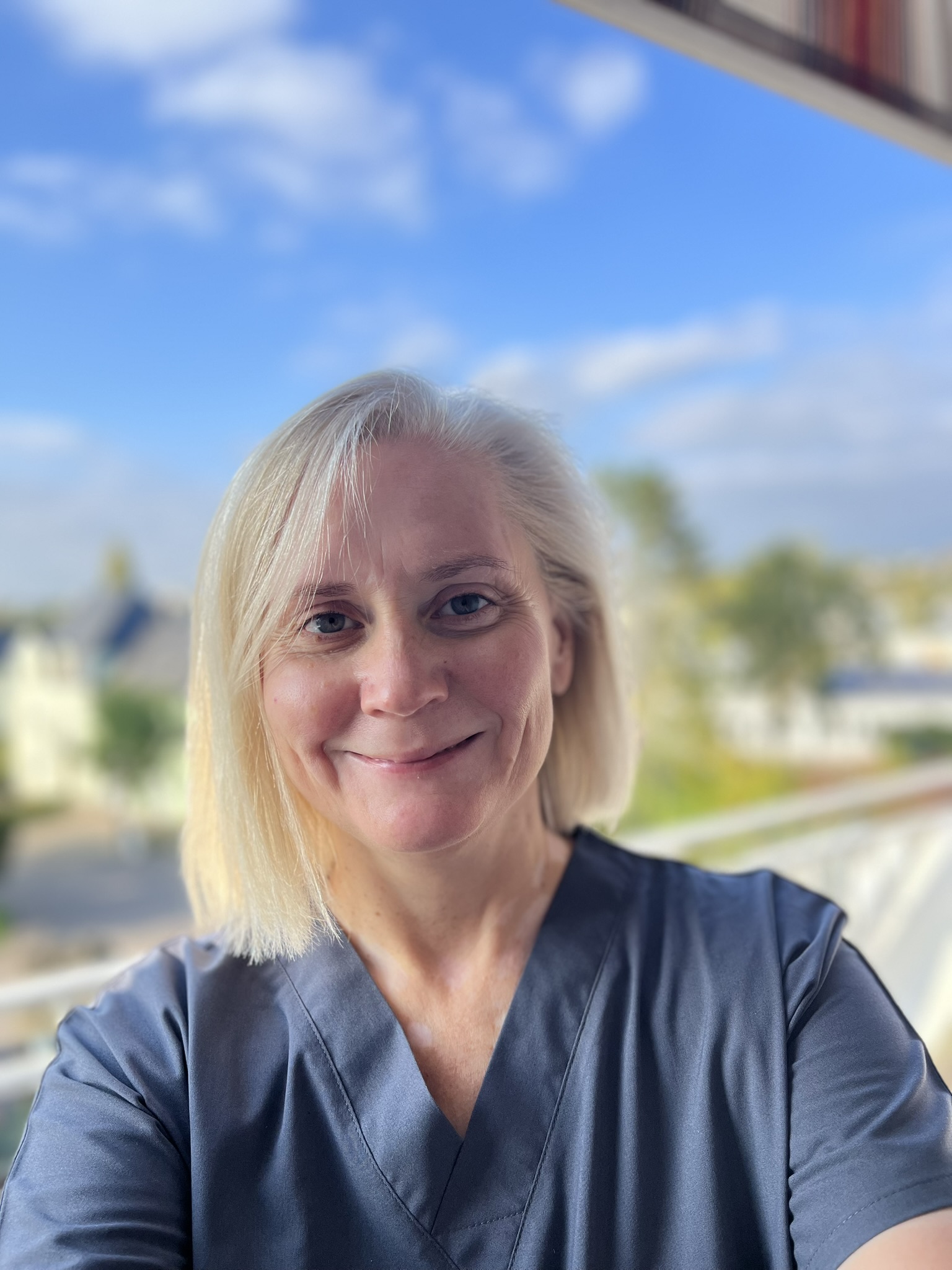
Portrait of Natalia Guskova

What is Biological Centering and how does it work?

Biological Centering is a modern somatic method for regulating functional and psycho-emotional tension, developed by Dr Yuri Valentinovich Chikurov. The practice focuses on gently helping the body release accumulated stress, long-standing muscle spasm, and limiting reaction patterns. Sessions often support deep relaxation, restored inner stability, and the organism’s natural self-regulation resources.

When stress and tension build up in the body

Discomfort in the back, neck, or joints often arises without an obvious mechanical cause. External assessments may look normal while stiffness, low energy, or background anxiety persist.

In everyday life the body carries a heavy load, compensating for chronic work stress, emotional overload, and unexpressed experience. When the nervous system stays in a state of hypervigilance for a long time, spasm can fix in the tissues. The area where you feel physical discomfort is often a compensatory link, while the source of imbalance lies in overall nervous-system tension and habitual reaction patterns.

The body as a reflection of inner state

Biological Centering rests on applied anatomy, neurophysiology, and body-oriented psychology. There is no mysticism: the body is viewed as one integrated biomechanical and nervous system.

Chronic fatigue, a sensation of a “lump in the throat”, restricted breathing, or muscle holding are objective signals of overload. When emotions are suppressed for a long time or you operate at your limit, the body retains that tension. The practitioner’s role is to help the nervous system recognise these areas and gently release them.

What a session is like

Sessions take place in an atmosphere of comfort and careful attention:

  • The practitioner does not use forceful techniques, sharp twists, or harsh manipulations.
  • Work is based on light, barely perceptible touch and myofascial guidance (in remote sessions — precise focus on somatic responses).
  • Areas of fixed tension are identified so the body can begin natural neutralisation of muscular and psychosomatic holding.

You lie on a treatment table in comfortable clothing, focusing on inner sensations and gradual relaxation. The method is exceptionally gentle and does not create stress for the organism.

Outcome: reset and natural balance

After deep myofascial and psycho-emotional tension release, the body often moves back toward balance:

  • Muscle hypertonus may ease and movement stiffness may decrease.
  • Breathing may become freer; overall wellbeing and sleep quality may improve.
  • Background anxiety may lessen; emotional tone may stabilise; mental clarity and a sense of resource may return.

Age guideline: comfortable accompaniment for clients up to 65 years.

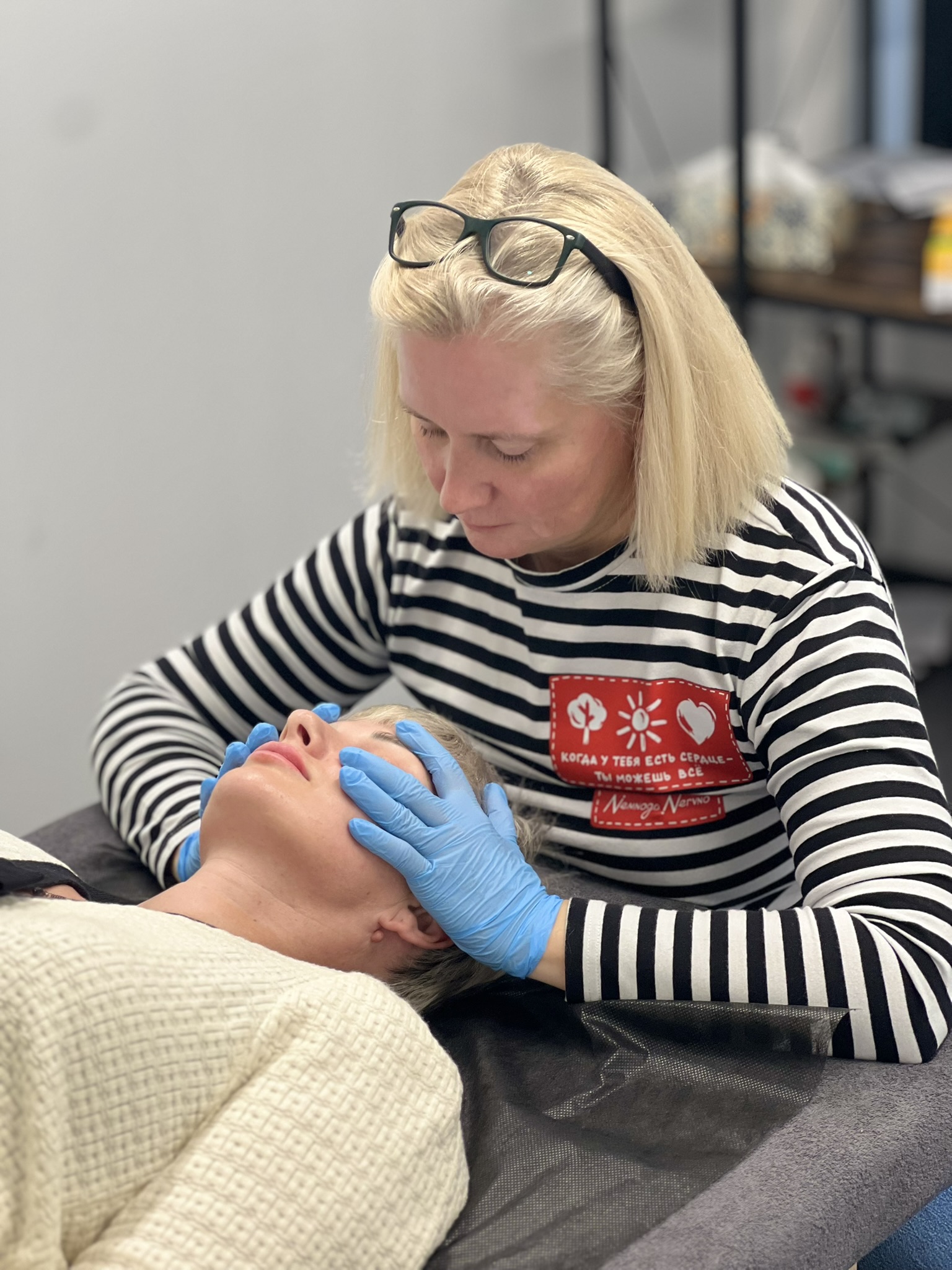
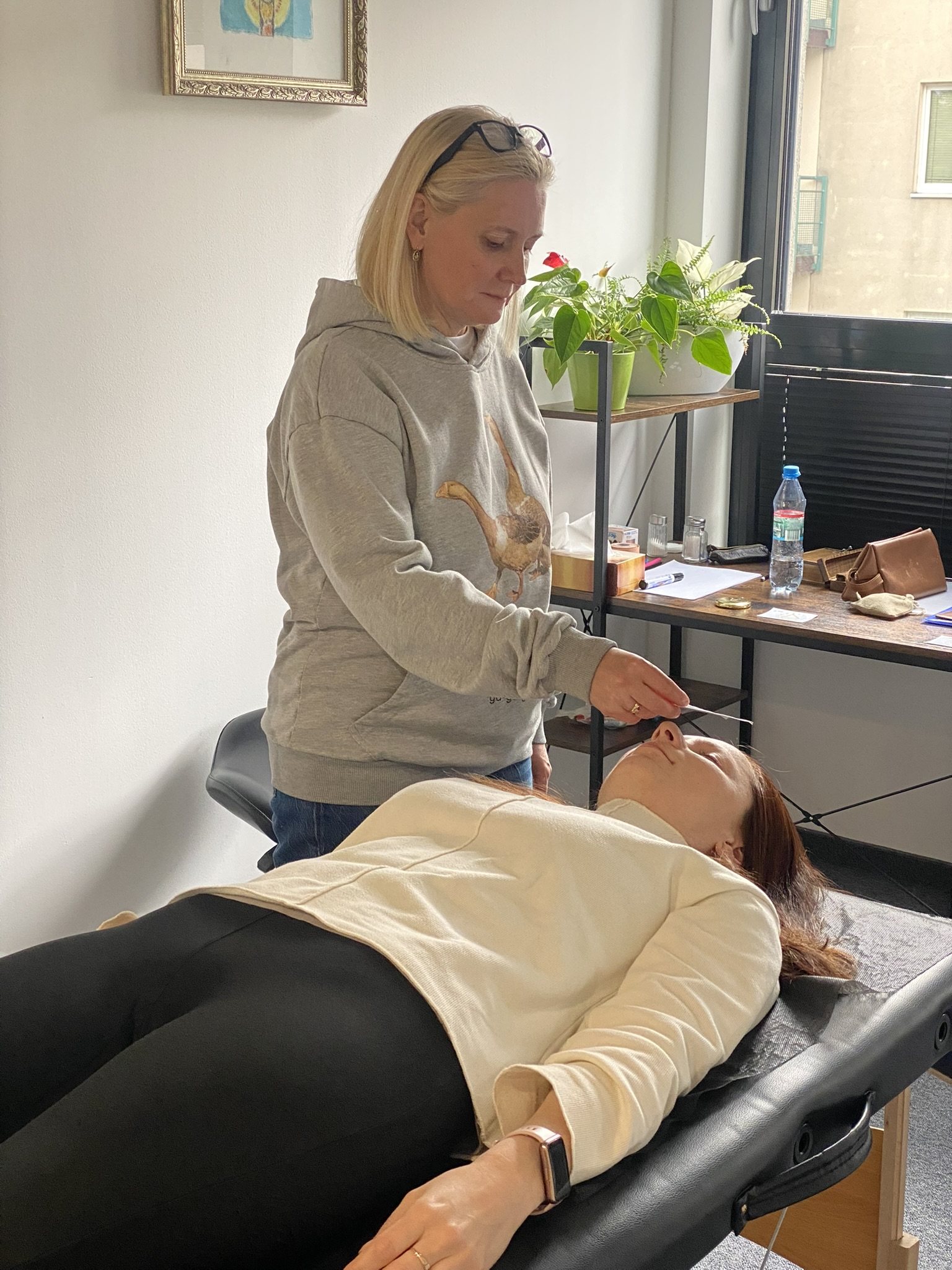
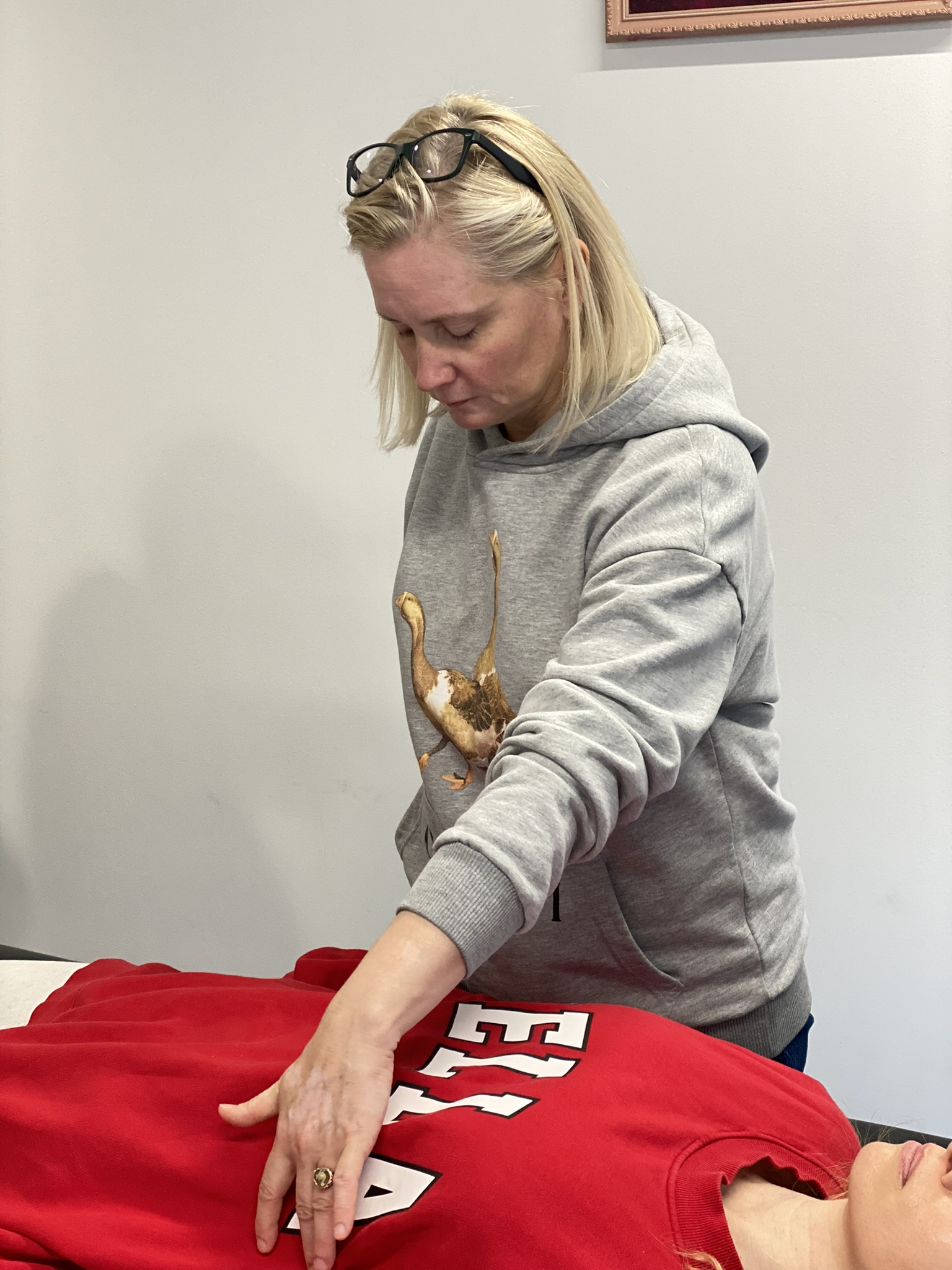
Practice atmosphere — 1Practice atmosphere
Gentle contact — 2
Practice atmosphere — 3Gentle contact

About the practitioner: from logic and structure to attention to the person

Natalia Guskova is a certified Biological Centering practitioner and somatic regulation specialist. She trained with method author Yuri Valentinovich Chikurov and completed in-depth practical preparation under the guidance of his licensed European teacher Evgeny Annenkov. Since 2024, private practice in Bertrange (Luxembourg) and online sessions worldwide have been her main professional focus.

25+ years in law and finance: the value of a structured approach

For more than 25 years I worked in law and banking, holding senior roles in credit and financial institutions. That profession shaped a strict habit of logic, structure, objective assessment of facts, and clear cause-and-effect links. There was never room for illusion or vague promises.

The other side of long-term leadership responsibility was constant stress, heavy workload, and the effects of a sedentary lifestyle. Chronic tension in the spine gradually became pronounced discomfort that limited movement. For a long time, standard approaches brought only short relief — until I turned to somatic practice.

Personal experience and path into the profession

Discovering Biological Centering was a turning point. I was struck by how gentle, careful, and physiologically precise work — without rough mechanical force — could release years of back tension in a few sessions and restore freedom of movement.

With a legal mindset, I wanted to understand the physiological basis of this process. That led to foundational training with school founder Dr Yuri Chikurov, followed by months of supervised skill-building with Evgeny Annenkov.

Careful accompaniment without mysticism

Today my practice combines two core supports:

  1. Pragmatism and reliability: respect for client boundaries, clear understanding of physiology, and no esoteric interpretations.
  2. Fine somatic attunement: the ability to listen carefully to the body’s signals, locate areas of functional tension, and help restore contact with oneself.

What matters to me is not promising instant miracles, but creating a safe, respectful space where the nervous system can release accumulated load, the body can regain lightness, and the mind can find calm confidence.

Education & certificates

Click a certificate to view full size

Focus areas & session formats

Approved practice directions below. In-person sessions in Bertrange (Luxembourg); remote format for most requests (except face and neck aesthetic modelling).

Harmonising relationships and interpersonal contact

Regular communication is a constant exchange of emotional reactions and non-verbal signals. Hidden tension often shows up as recurring disagreements, background irritation, mutual blame, and bodily fatigue. Biological Centering helps gently unwind accumulated inner reactions without exhausting “relationship talks”, restoring clarity, stability, and mutual respect.

Why trying to “change the other person” fails

In difficult moments we often try to change a partner’s behaviour or defend against a perceived threat. Yet any bond is a closed system: the other person picks up our inner tension and mirrors it unconsciously.

Real shift starts with your own state. When inner anxiety, hurt, or resistance eases, your non-verbal pattern changes — and others often respond more calmly and constructively.

Areas of interaction addressed in sessions:

  • Family & personal life: couples, recurring conflict, emotional distance, older generations, siblings.
  • Parent–child: tension with children and teens, peer adaptation, contact with teachers and coaches.
  • Professional life: business partnerships, managers, team misunderstandings, burnout.

What may change after a session:

  • Less emotional heat: reduced stress, irritation, and inner rush in communication.
  • More adaptive responses: less automatic escalation and seeing the other as a threat.
  • Clearer choices: seeing what is happening and either renewing trust or setting boundaries calmly.

Postural balance, freedom of movement & recovery after load

Chronic back tension, neck stiffness, and after-effects of everyday or sports injuries often mean years of limitation and fatigue. Biological Centering uses gentle perceptual techniques to release deep fascial and muscle holding — without forceful twists, manipulations, or “cracking”. The body can recover natural biomechanics and easier movement.

What this direction addresses

Based on functional anatomy and somatic regulation, the method supports a wide range of muscular imbalances:

Spine, neck & posture

  • Functional muscle holding in cervical, thoracic, and lumbar areas.
  • Postural imbalance and uneven load from desk work (“office syndrome”).
  • Stiffness and tension between the shoulder blades.

Recovery after strain or injury (rehabilitation phase)

  • Residual spasm after bruises, sprains, and falls.
  • Overload after intensive sport or physical work.
  • Gentle fascial support in post-operative recovery (after main medical treatment).

Joints & overall biomechanics

  • Joint stiffness and functional resistance.
  • Compensatory posture and uneven weight on the legs.
  • TMJ area tension (jaw clenching).
  • Diffuse bodily discomfort from accumulated stress.

Approach & format

  • Gentle and safe: no rough mechanical pressure — suitable for many ages.
  • Individual pace: sessions support natural fascial self-regulation.
  • Typical course: often 1–4 sessions, 7–10 days apart, depending on tension history.

Only in Bertrange · in-person sessions

Aesthetic modelling of face & neck: a holistic approach

Aesthetic modelling through Biological Centering is a whole-body view of freshness and vitality. Rather than surface cosmetics alone, aesthetics follow balance in posture, fascial tone, and relaxed facial muscles. Working with spasm helps restore natural tissue tone without pain, skin trauma, or devices.

Session focus areas

Contour clarity & tone

  • Support for facial oval and jawline definition.
  • Reduced puffiness and support for natural lymph flow.

Smoothness & freshness

  • Softening nasolabial lines through mimetic release.
  • Ease around mouth and eye muscles.
  • Reduced under-eye shadows from chronic fatigue.

Neck posture & alignment

  • Neck and collar tension (“tech neck” from phones and laptops).
  • Fascial work on décolleté and scalp aponeurosis to reduce downward pull.

Living, soft expression

  • Release of chronic “tension mask” for an open, harmonious face.

How a session unfolds

  • Light perceptual touch — no aggressive rubbing or vascular compression.
  • Deep mental relaxation while face and neck tissues release.

Results & pacing

  • Lightness, freshness, and gentle lift often after the first sessions.
  • Whole-body balance helps results last.
  • Typical course: about 2–6 sessions (often ~4) with comfortable intervals.

Only in Bertrange · in-person sessions

Visceral comfort & functional balance of internal organs

Chronic stress, low activity, and prolonged nervous overload often show as somatic spasm in the abdomen and chest. Visceral techniques in Biological Centering gently release fascial tension around internal organs, supporting microcirculation, physiological mobility, and self-regulation.

What this direction addresses

Gentle perceptual work supports functional imbalances without rough mechanical pressure:

Digestive system & epigastrium

  • Functional tension and stiffness in stomach and intestines.
  • Discomfort linked to bloating and stress-related GI spasm.
  • Support for biliary tone and functional liver state.

Breathing & diaphragm

  • Diaphragm spasm release and freer breathing.
  • Chest constriction from prolonged emotional stress.
  • Tissue tone and venous drainage optimisation.

Pelvis & postural balance

  • Pelvic floor and sacral fascial-muscular tension.
  • Somatic discomfort during menstrual cycle.
  • Fascial balance under functional pelvic overload.

Post-operative & recovery support

  • Tissue tension and scar adhesions (after healing, in rehabilitation).
  • Restoring natural mobility of visceral ligamentous apparatus.

What clients often notice

  • Physical lightness: less bloating, spasm, and background abdominal tension.
  • Improved visceral motility: more natural digestion and breathing rhythm.
  • More resource: chronic internal spasm release can improve sleep and wellbeing.

Psychosomatic balance & nervous-system resilience

The body responds to emotional overload, anxiety, and unexpressed experience. When the mind ignores stress, the nervous system may fix it in chronic somatic holding. Biological Centering helps locate and gently neutralise psycho-emotional tension in the body without exhausting talk, supporting inner calm and mental clarity.

Principle of psychosomatic regulation

The body has strong adaptation and self-repair capacity, yet chronic fatigue and suppressed stress can lock the nervous system in ongoing alert.

Biological Centering practice is not psychotherapy or psychological counselling.

The practitioner works with physiological response: finding where tissues hold stress and helping the nervous system shift from tension toward deep recovery.

Areas sessions can support

Emotional load & stress

  • Background anxiety, restlessness, nervousness.
  • Burnout, chronic fatigue, low energy.
  • Insomnia, difficulty falling asleep, light sleep.
  • Loss of contact with one’s needs and sense of inner overload.

Autonomic & bodily signs

  • “Lump in the throat” and chest tightness when anxious.
  • Tension headaches and ear noise linked to cervical overload.
  • Diffuse bodily discomfort without established organic pathology.
  • Autonomic lability and unstable vascular reactions to change.

Family & developmental adaptation

  • Support for children and teens with school overload, anxiety, and adaptation difficulties.

After a session

Releasing a held tension pattern can free the nervous system: less mental looping, steadier mood, bodily ease, and return of calm confidence and capacity.

Remote sessions: working at a distance

Modern perceptual somatic practice is no longer limited to in-person physical contact alone. Remote Biological Centering sessions allow full work with psychosomatic tension, background anxiety, and accumulated stress — wherever you are in the world. The practitioner’s focused attention on your somatic response can support deep relaxation and autonomic nervous-system regulation as productively as in-person sessions for many clients.

Why online can work

Remote body-oriented work can feel unfamiliar at first, yet it follows neurophysiology: the body responds to attention and emotional holding.

At home, many people feel safer. Fewer defensive barriers can mean faster shift from stress (“fight or flight”) toward parasympathetic recovery (“rest and regulate”).

What a remote session can feel like

Without touch, many clients still notice clear bodily responses:

  • Slower thoughts, mental quiet, inner calm.
  • Ease in neck, shoulders, and diaphragm.
  • Signs of nervous-system reset: deep sighs, yawning, warmth, mild sleepiness.

These signs often indicate the body has released a held tension pattern and moved toward self-regulation.

Resilience to triggers

A core aim is dis-identification from the problem. Triggers that once spiked anxiety or muscle holding may load the nervous system less.

Many people report steadier, calmer perception of circumstances.

Remote sessions are offered for all practice directions except aesthetic modelling of the face and neck — that work is in-person only.

Scope & limits

Biological Centering does not replace medicine, psychiatry, or crisis care.

  • Oncology and acute medical conditions — only alongside physician care, never instead of it.
  • Addiction, suicidal risk, severe mental health conditions — specialized help is required.
  • Minors — only by separate agreement and within the practitioner’s competence.

Client voices

«After several sessions I could sense more clearly where tension “gets stuck” in my body — and relate to it more gently.»

— Client, 40+, Luxembourg

«I value the calm tone and lack of pressure. Not advice-therapy, but space for observation.»

— Client, 35+, online

FAQ

Is this medicine or psychotherapy?
No. This is a complementary somatic practice in Biological Centering — functional tension release and psycho-emotional regulation, not medical treatment or psychotherapy. When appropriate, we encourage you to consult a physician or licensed mental-health professional.
How long is a session?
Usually 60–90 minutes. Exact length is agreed when booking.
Online sessions?
Yes, with a stable connection and a private setting.
How to book?
Message on WhatsApp or email — briefly describe your inquiry; we agree format and time.